The regenerative revolution: Can cell therapy teach the liver to heal itself?

Beyond CAR-T, a new generation of cell therapies is moving from killing disease to restoring damaged organs.
For many patients with advanced liver disease, the outlook can be bleak. Once cirrhosis progresses to decompensation, treatment options are limited and survival rates following a second decompensation event can rival those of aggressive cancers. For decades, the ultimate solution has remained largely unchanged: a liver transplant.
But what if cell therapy could help the organ repair itself?
That is the question driving Resolution Therapeutics, a clinical-stage biotechnology company developing engineered macrophage therapies designed to regenerate damaged tissue rather than destroy diseased cells. The approach reflects what many believe could become the next chapter in cell therapy, moving beyond oncology and into chronic diseases affecting millions of patients worldwide.
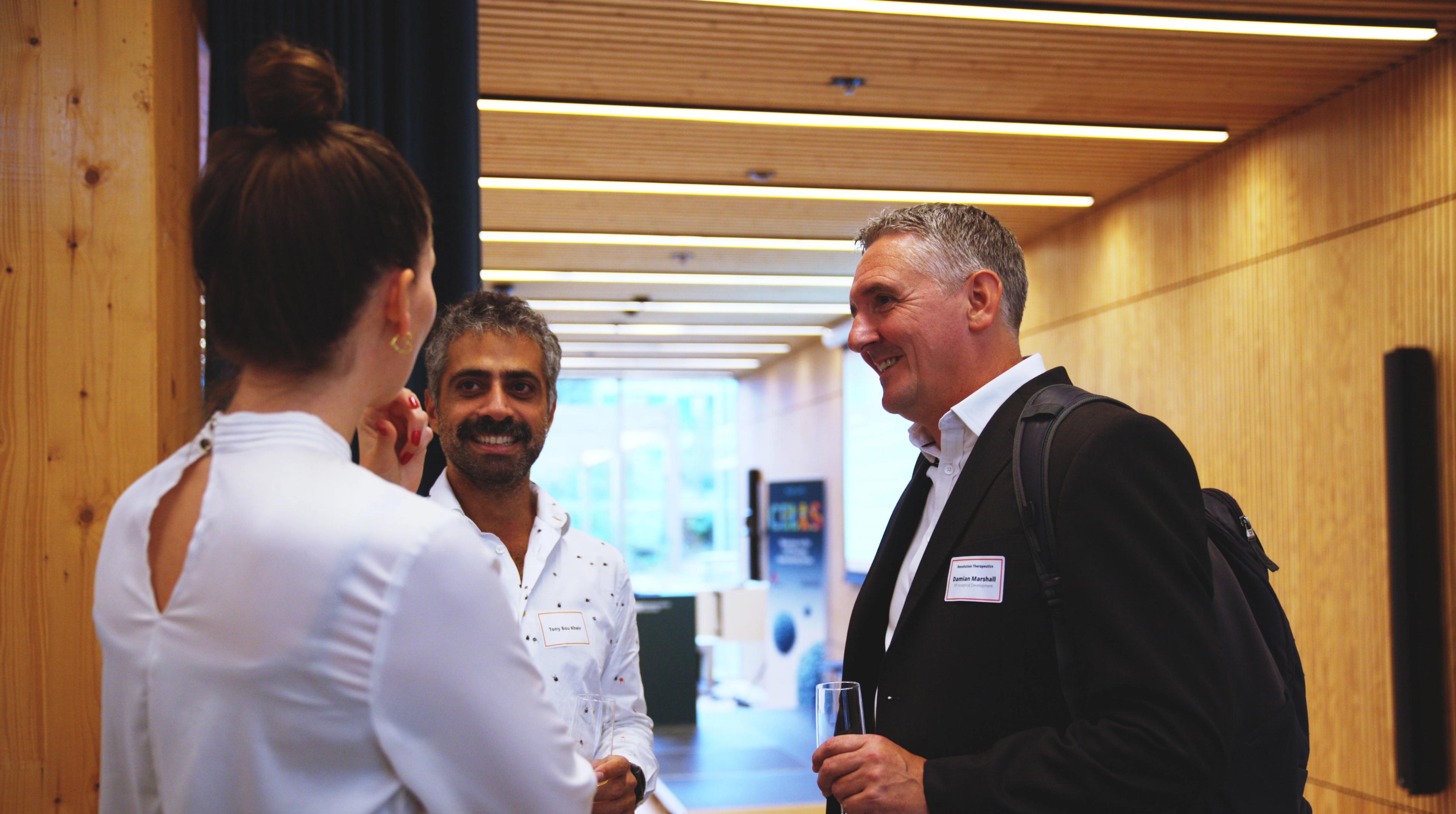
"We don't need these cells to persist forever," explains Damian Marshall, Vice President of Analytical Development at Resolution Therapeutics, speaking at the recent Built with Cells event hosted by Cellerator and Miltenyi Biotec.
The comment captures a fundamental shift in thinking. For much of the past decade, cell therapy innovation has centred on creating immune cells that persist and eliminate disease. Resolution's approach takes a different path.
A different kind of cell therapy
CAR-T cells are engineered to seek out and eliminate cancer cells, with long-term persistence often considered an important part of their therapeutic effect. Resolution's macrophages, however, are designed with a different objective.
Instead of attacking disease, they act more like temporary repair crews. Engineered using mRNA to express IL-10 and MMP-9, the cells are intended to reduce inflammation, break down scar tissue and stimulate the body's own regenerative mechanisms. After carrying out their task, they naturally disappear within a matter of weeks.
The hope is that this short intervention is enough to initiate what Marshall describes as a regenerative "virtuous cycle", transforming a chronically inflamed and scarred liver into an environment where healthy tissue can begin to regenerate.
It is a concept rooted in more than fifteen years of academic research led by Professors Stuart Forbes and John Campbell in Edinburgh. That work laid the foundation for a company seeking to tackle one of medicine's most persistent challenges: helping damaged organs recover function rather than simply managing decline.
From four doses to lasting change
The therapy's design also differs from many existing cell therapies in practical terms.
While CAR-T treatments are frequently administered as a single fresh infusion, Resolution's macrophages are cryopreserved and delivered in four separate doses. The repeated administrations are intended to reinforce the regenerative response over time, helping to establish the conditions needed for long-term tissue repair.
The manufacturing process begins with patient-derived monocytes collected through apheresis. These cells are differentiated into macrophages, engineered with mRNA, cryopreserved and later administered through a brief intravenous infusion.
Although the treatment itself may take only minutes to administer, the science and manufacturing required to reach that stage are considerably more complex.
The hidden challenge of scale
As cell therapies mature, much of the industry's attention has focused on manufacturing automation. Companies are investing heavily in technologies capable of producing larger numbers of doses while maintaining consistency and quality.
However, Marshall believes another challenge receives far less attention.
"Everybody quite rightly puts loads of effort into process automation," he says. "But your QC hasn't kept up. It then starts to be a significant contributor to your cost of goods."
For every batch of therapy produced, Resolution currently performs approximately forty analytical tests to assess identity, purity, potency and safety. While manufacturing processes are increasingly automated, many quality-control procedures remain highly manual.
The result is what Marshall describes as a potential "QC cliff."
In early clinical development, manufacturing and quality-control operations often require comparable levels of resources. But as production scales from dozens of doses to thousands, the analytical burden can expand dramatically, potentially requiring far larger facilities and significantly more personnel unless laboratories adopt automation at the same pace as manufacturing.
For a sector seeking commercial viability, it is a challenge that cannot be ignored.
The potency puzzle
Alongside manufacturing, developers face another obstacle: demonstrating potency.
For CAR-T therapies, regulators increasingly have established expectations around the assays used to confirm product performance. For emerging cell therapies such as engineered macrophages, the path is less clearly defined.
Resolution's cells are expected to influence multiple biological processes simultaneously, from reducing inflammation to recruiting regenerative cells and breaking down fibrosis. Demonstrating all these activities in a reliable and scalable way presents a substantial analytical challenge.
Regulatory agencies frequently regard biological assays as the gold standard, but such tests can be time-consuming, variable and difficult to implement at large scale.
Marshall advocates for what he describes as a phase-appropriate strategy, beginning with a broad analytical framework in early development before gradually narrowing toward the most meaningful surrogate markers as programmes advance.
The goal is not simply regulatory compliance. It is developing a testing strategy capable of supporting both clinical development and eventual commercialisation.
Expanding the cell therapy horizon
Resolution Therapeutics is among a growing number of developers exploring whether cell therapy can move beyond oncology and into regenerative medicine, addressing diseases where the objective is not to eliminate a target but to rebuild function.
Success is far from guaranteed. The regulatory questions remain challenging, and the manufacturing hurdles are substantial. Yet the potential is equally significant.
If the first generation of cell therapies proved that engineered immune cells could destroy cancer, the next generation may demonstrate that they can help damaged organs heal.
And for patients facing chronic liver failure, that possibility could represent a profound shift in what cell therapy can achieve.
Reach out to hear more
Mads Cordt Gyldenkærne
Communication & Brand Lead